Capsule Wardrobe Over 50 Plus Size: 15 Pieces and How to Check the Fit
By Style Pieces 50 · Updated 2026-11-16
You have walked the aisles and scrolled the pages, and the good basics seem to stop two sizes before yours. When choices are few, it is tempting to buy whatever fits and call it a wardrobe. A better plan is a small set of pieces that you choose on purpose, check against your own measurements and wear on repeat. Here are 15 pieces for a casual, classy plus-size capsule over 50, the measurements to shop by, and a fit check that works in a store or at your kitchen table with a parcel.
Why shopping plus size needs a different method
According to Wikipedia, plus-size clothing patterns have traditionally been graded up from a smaller construction pattern.
In practice that can mean a garment is simply the small pattern made bigger, so the armhole, the rise and the sleeve may not match a larger body. You will see it as a shoulder seam that sits too far out, a gaping bust or a crotch seam that cuts in.
Wikipedia adds that many retailers now use their own measurement data and body-scan projects.
That is good news, because brands that measure real customers tend to publish better charts. It also means you cannot trust the number on the tag alone.
Wikipedia lists ASTM D6960-04 as a standard for women's plus sizes, dated 2004.
A brand may follow a standard like that or ignore it, so you shop from a measuring card. Write these on your phone once, and compare them with the chart on every product page.
Your measuring card
| Measure | How to take it | What it decides |
|---|---|---|
| Bust | Around the fullest part, tape level at the back | Size of shirts, knits, dresses, blazers |
| Waist | Where you bend sideways, relaxed | Waistbands, wrap dresses |
| Hip | Around the fullest part of the seat | Trousers, jeans, skirts |
| Upper arm | Around the fullest part, arm relaxed | Sleeves on jackets, cardigans and shirts |
| Thigh | Around the top of one leg | Jeans and trousers with a straight leg |
| Rise | Seat of a chair to the waist, tape along the side | Whether a waistband stays put or rolls |
| Calf | Around the widest part of one calf | Boots and wide-leg trousers |
| Inseam | Crotch to ankle bone on a pair that fits | Hem length |
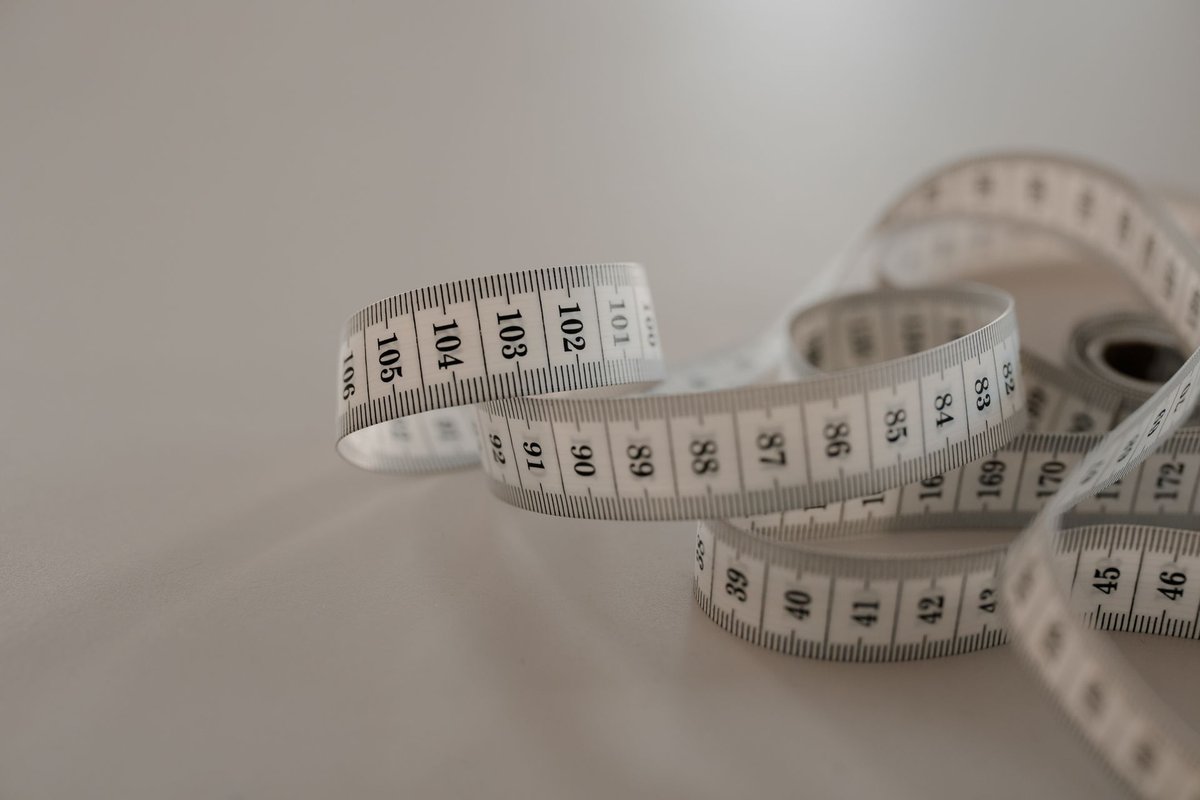
When a listing shows garment measurements, not only body measurements, compare them with yours. As a rule of thumb, a woven shirt needs a few inches more than your bust to close without pulling, while a stretch knit can sit closer.
The 15 pieces
Tops (5)
- A long-line tee in a medium-weight knit. Fit check: lift your arms and the hem should stay below the waistband.
- A three-quarter-sleeve top. Fit check: the sleeve should not squeeze the upper arm.
- A button-up shirt with some stretch, or a pleat at the back. Fit check: hug yourself and watch the bust buttons.
- A fine-knit V-neck sweater. Fit check: the neckline should lie flat and the hem should sit smoothly over the hip.
- A long cardigan that reaches the upper thigh. Fit check: it should close, or hang open without pulling at the shoulders.
Bottoms (4)
- Pull-on trousers with a wide, flat waistband. Fit check: the waistband should lie flat when you sit.
- Dark straight-leg jeans with stretch. Fit check: squat once. If they slide down at the back, try a taller rise.
- Wide-leg or bootcut ponte trousers for a dressier day. Fit check: the leg should fall straight from the hip without catching at the thigh.
- A knit midi dress or skirt. Fit check: sit down, and the fabric should not ride up or cling at the knee.
Layers (3)
- A soft, stretch blazer. Fit check: cross your arms and it should not pull across the back.
- A long coat with a roomy sleeve. Fit check: wear your thickest sweater under it.
- A casual jacket in denim, canvas or quilting. Fit check: close the front with a sweater on underneath.
Shoes (3)
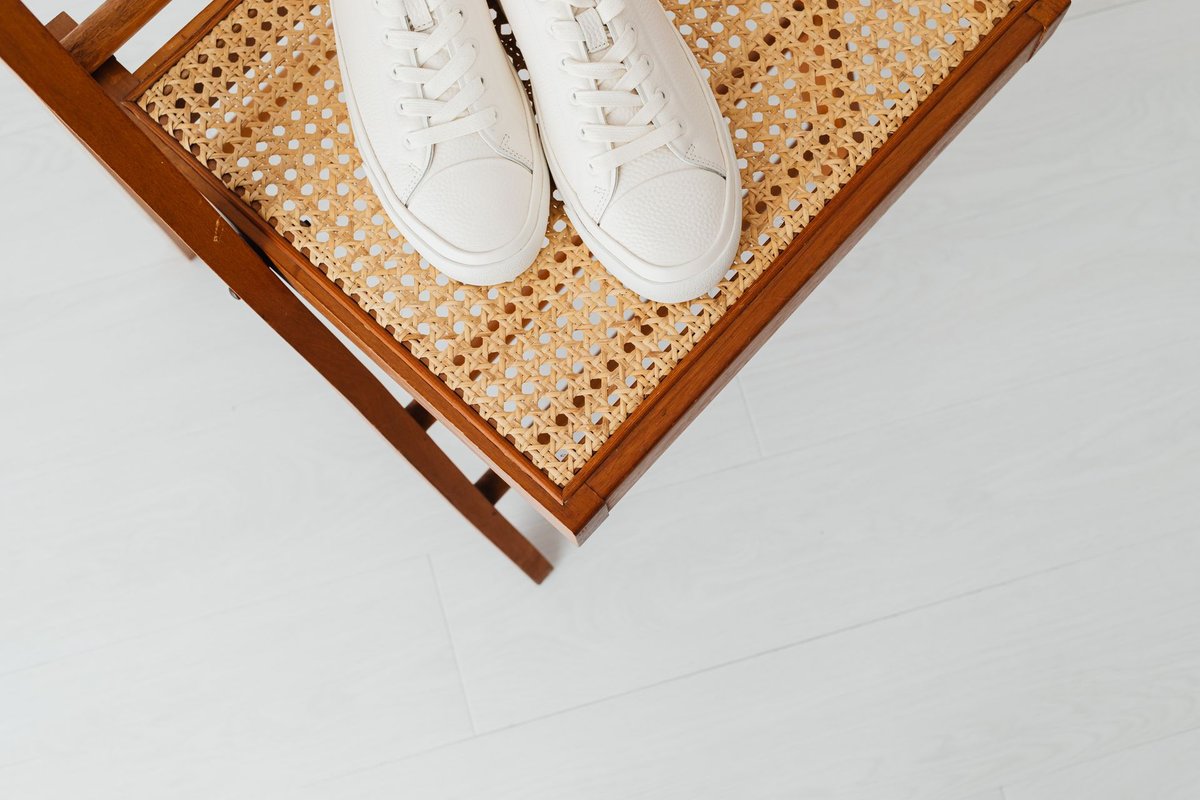
- White leather sneakers. Fit check: a thumb's width of room at the toe and a heel that does not slip.
- Loafers or soft flats. Fit check: they should bend where your foot bends.
- Ankle boots with a stretch panel or a generous shaft. Fit check: zip them up with your usual trousers or socks on.
Choose fabrics with give
For a plus-size closet, the fiber content matters as much as the cut. Look on the label for a small share of elastic fiber.
Wikipedia says spandex is usually mixed with cotton or polyester and accounts for a small percentage of the final fabric.
Wikipedia also notes that spandex returns to its original shape after stretching, and that it eases body movement.
That is why a cotton tee with a little spandex bounces back after a day of sitting, while a stiff cotton one bags at the elbows and knees. Look for it in jeans, knit trousers, ponte blazers and fitted tees.
Fix what almost fits with a tailor
With limited stock, you will often buy a piece that fits in four places and misses in one. These five fixes are common and small:
- Sleeves: shortened at the cuff to meet the wrist bone.
- Hems: trousers or skirts taken up to touch the top of the shoe.
- Waistbands: a gap at the back closed with a small dart.
- Straps: shortened on a dress so the neckline sits flat.
- Side seams: eased in on a jacket that is correct at the shoulders but wide below.
Fit the largest part of your body and alter the rest. That is easier than the other way around, because a tailor can take fabric in far more easily than they can add it.
A fit check for any plus-size piece
- Raise your arms overhead. A good sleeve moves with you and does not drag the whole top upward.
- Circle your arms as if you were hugging a pillow. Check the back seam and the underarm.
- Sit and lean forward. The waistband and neckline should stay where they are.
- Walk to the door and back. Notice any rubbing at the thigh or any twisting at the hem.
- Check the ends. Sleeves, hems and cuffs should end where a tailor would mark them.
Outfit formulas for the 15 pieces
- Errands: long-line tee + straight-leg jeans + long cardigan + white sneakers.
- Lunch with friends: V-neck sweater + pull-on trousers + loafers.
- Church: knit midi dress + long cardigan + ankle boots.
- A work-style day: button-up shirt + stretch blazer + ponte trousers + flats.
- A cold afternoon: three-quarter-sleeve top + sweater + jeans + long coat + boots.
- Weekend: casual jacket + tee + jeans + sneakers.
If you want more combinations from the same pieces, the guide to outfit formulas for women over 60 gives ten more. For the order in which to buy, see wardrobe essentials for size 16. The shapes in outfits for women over 50 with a tummy also work in every plus size.
Shopping online without guessing
- Read the size chart for the exact item, because two garments from one brand can use different charts.
- Choose the size for your bust on tops and your hip on bottoms, and alter the rest.
- Read the care label and the return policy before you add to the cart.
- Try each order at home with the shoes and layers you will wear, and send back what fails the fit check within the return window.
Mistakes to avoid
- Choosing a tent. More fabric does not mean more comfort. A good cut has shape at the shoulders and the hem.
- Buying for a future size. Clothes should fit the body you have this month.
- Ignoring sleeves. Tight upper arms are a common reason a good top stays in the closet.
- Buying in a rush. A capsule is built over weeks. Add one piece, wear it, then add the next.
The capsule wardrobes page lists every guide in this series.
Your next step
Take your eight measurements this week and save them on your phone. Pick the single piece from the list that you would wear most, and find it by measurements, not by size tag.